Tirian and Jewel Surrender to the False Aslan’s Forces
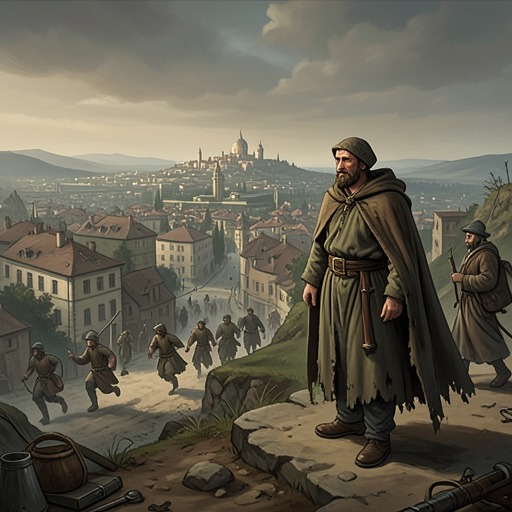
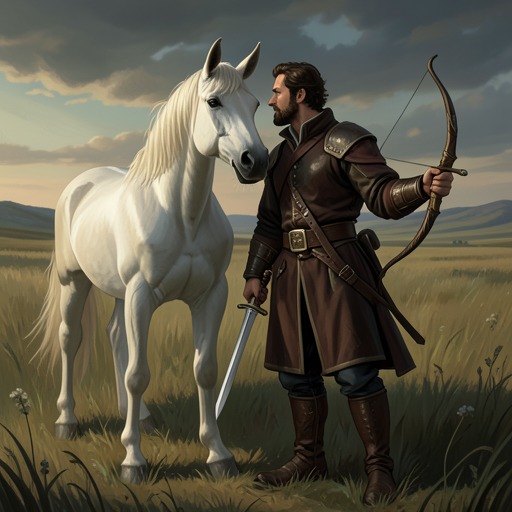
The Last BattleTirian and Jewel surrender to the forces gathered around the supposed Aslan not because they accept Shift’s rule, but because the King fears that their own violence may have offended the real Aslan. Their decision follows the revelation that Calormenes are whipping a free Talking Horse, and the two companions’ immediate killing of its tormentors. In the gap between that rescue and their return to captivity, the action turns from anger to self-accusation: if Aslan has truly commanded what they have witnessed, Tirian wants to face his judgment, even at the cost of his life.
The discovery and the killing
Tirian had assumed that the horses hauling timber were ordinary, speechless animals. He had been appalled by the destruction of the Trees, but had not imagined that anyone would harness a free Talking Horse of Narnia, still less strike one with a whip. When one of the horses rears and protests that he is doing all he can, the King understands that the apparent work animal is one of his own people. That recognition changes the meaning of the scene: what had seemed like harsh treatment of an animal is an assault on a Narnian subject.
Tirian and Jewel react together and without deliberation. Tirian kills one Calormene with his sword; Jewel kills the other with his horn. Their action stops the immediate abuse, but the circumstances trouble them as soon as they have escaped the enemy’s sight. The men had been unarmed, and Tirian recognizes that he and Jewel attacked without first challenging them. Their anger at the mistreatment does not erase the moral question of how they responded to it.
From resistance to surrender
Tirian tells Jewel that they have done a dreadful deed and calls himself dishonored. Jewel agrees that they were provoked, but the King remains preoccupied with the way they killed. The episode gives their victory an immediate cost: rather than treating the deaths as an uncomplicated act of justice, Tirian judges his own conduct against the standards he believes a king and knight should uphold. Jewel, who had acted beside him, shares his shame.
The deeper crisis is the claim that the Horse and a Rat have both said the violence was by Aslan’s orders. Tirian cannot reconcile that assertion with the Aslan he and Jewel have believed in and longed for, yet he cannot dismiss it simply because it is unbearable. He argues that they cannot know what Aslan would do, especially when they themselves have become murderers. His decision to return is therefore an act of submission under uncertainty: he will give up his sword, put himself in the Calormenes’ hands, and ask to be brought before Aslan so that justice can be done to him.
Jewel warns that this choice will mean Tirian’s death. The King answers that death would be preferable to living with the fear that Aslan has come and is not the Aslan they trusted. Jewel then insists on sharing his fate: if Tirian is dead, and Aslan is not Aslan, Jewel sees no life left for himself. They turn back together, in tears. Their loyalty does not remove their uncertainty; it makes them face it side by side.
The surrender and its immediate result
When they reach the place where the timber work is proceeding, the Calormenes approach with weapons. Tirian holds out his sword by its hilt and identifies himself as a former King, now a dishonored knight, giving himself up to Aslan’s justice. Jewel gives himself up as well. Their words enact the surrender they have chosen: they do not return to fight, but offer themselves to the judgment they believe may be waiting.
The Calormenes take their weapons and bind the two captives. Tirian’s hands are tied behind him, and a rope halter is put around Jewel’s neck. A helmeted officer removes the King’s gold circlet and conceals it among his clothes. The taking of the circlet makes the surrender a visible reversal of status: the King is reduced to a prisoner while his authority is appropriated by the enemy.
The captives are led uphill to a clearing on the hilltop. There they see a small thatched hut resembling a stable, with its door shut, and Shift seated outside before a crowd of worried and bewildered Talking Beasts. Tirian and Jewel had expected to see Aslan and know nothing yet of the Ape’s role, so the sight leaves them perplexed. Shift is dressed in a scarlet jacket made for a Dwarf, jewelled slippers, and what appears to be a paper crown; a heap of nuts sits beside him. The scene presents the authority to which they have surrendered as a spectacle, not as the direct encounter with Aslan they sought.
The rule behind the claimed authority
Shift claims that he is a Man rather than an Ape and that his supposed age and wisdom make him the only one Aslan will speak to. He casts the other animals as too stupid to hear Aslan directly, placing himself between them and the authority he invokes. His claim gives the captives’ surrender a bitter irony: Tirian has returned in the hope of receiving justice from Aslan, but the gathering is controlled by a self-appointed intermediary who monopolizes the supposed message.
Shift announces that the creatures will not regain their freedom after the timber work. Horses, bulls, and donkeys are to be sent to Calormen to work; digging animals, including moles and rabbits, and the Dwarfs are to be sent to the Tisroc’s mines. When the Beasts object that Aslan would never sell them into slavery, Shift denies the word while describing wages that will be paid into Aslan’s treasury and used for everyone’s good. A Calormene official endorses the arrangement in the Tisroc’s name. The speech turns coerced labor into an alleged public benefit, while leaving the workers themselves with no control over their labor or earnings.
Shift extends the same claim of benevolence into a promise of roads, cities, schools, offices, and institutions of confinement. When an old Bear says that the Beasts want freedom and want to hear Aslan speak for himself, Shift dismisses him as stupid and defines true freedom as doing what Shift tells him. The exchange exposes the purpose of the supposed message: it does not merely interpret Aslan for the crowd, but declares dissent illegitimate and obedience a virtue. Tirian’s surrender thus brings him into the heart of a deception that uses Aslan’s name to justify rule by the Ape and cooperation with Calormen.